The $50 Billion Consumer Settlement Problem Almost No One Is Talking About
Every year, billions of dollars in court-approved class action settlements go completely unclaimed. Here's what one Ohio grandmother learned when her daughter showed her the truth — and why it changed how she shops.
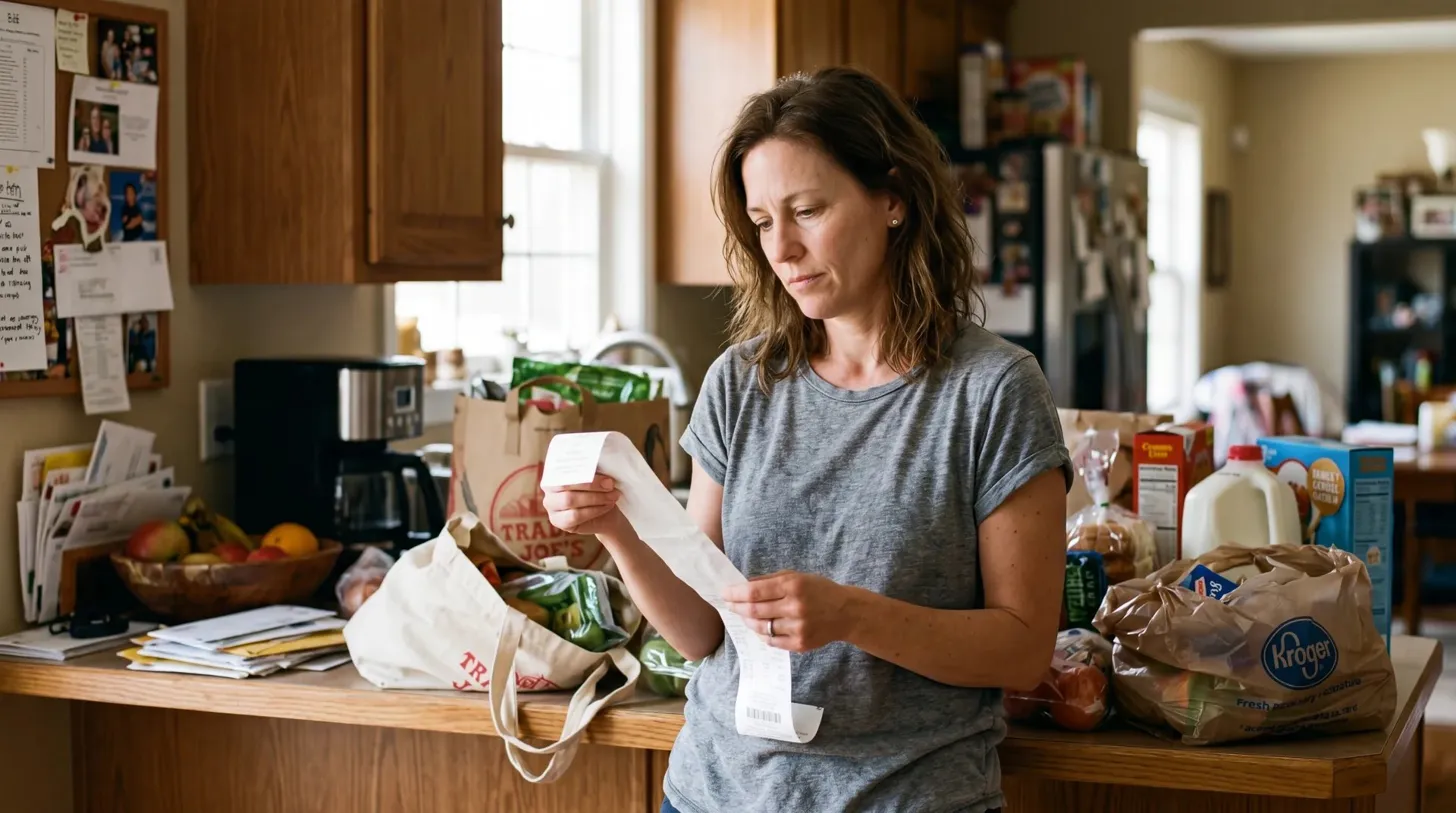
Linda Hoffmann, 62, of Dayton, Ohio, reviewing a grocery receipt at her kitchen table. She says she never knew she could recover money on products she'd already purchased.
Linda Hoffmann didn't think much of it when her daughter asked her a strange question over Sunday dinner. "Mom — did you know you could've gotten money back on the milk and eggs you've been buying for the last four years?"
Linda laughed. She thought it was a scam. A joke. Or one of those chain emails her brother-in-law always forwards.
It wasn't.
What her daughter showed her that night — right there on a phone at the kitchen table — has since become the thing Linda brings up at every church potluck, every grandkid's birthday party, and every coffee date with her friends from the neighborhood.
Because once you see it, you can't unsee it.
Groceries Cost More Than Ever. But That's Only Half The Story.
If you've been to the grocery store lately, you already know. A gallon of milk costs more than it did five years ago. Eggs went through the roof. A bag of chicken breasts that used to be $8 is now $14. Cereal. Bread. Cheese. All of it.
For families on a fixed income — and for working moms trying to feed three kids — it's not a little annoyance anymore. It's a real problem. Linda's grocery bill went from around $140 a week to over $220. Same list. Same store.
But here's the part nobody tells you at the checkout counter:
A lot of those price hikes weren't just inflation.
Over the last several years, major food and consumer companies have been sued — and in many cases have admitted or settled — for things like price-fixing, deceptive labeling, misleading "natural" or "organic" claims, hidden fees, and overcharging customers.
When a company settles one of these lawsuits, they have to pay money back. Not to the government. Not to charity.
To the customers they overcharged. People like you.
What Is A "Consumer Class Action Settlement," Exactly?
Let's keep this simple. Because honestly, when I first started reporting on this, I found most articles made it sound way more complicated than it actually is.
Here's how it works, in plain English:
Step 1. A big company does something wrong. Maybe they lied about what's in their product. Maybe they secretly colluded with competitors to keep prices high. Maybe they charged a fee that wasn't legal.
Step 2. A group of customers (or a law firm on their behalf) sues the company. This is called a "class action" — because the customers are treated as a class, meaning one big group.
Step 3. Instead of fighting for years in court, most companies settle. They agree to pay a large sum of money — sometimes $10 million, sometimes $500 million, sometimes more than $1 billion — to be distributed back to the customers they harmed.
Step 4. A judge approves the settlement. It becomes official. The money goes into a fund.
Step 5. The customers who were affected are supposed to file a simple claim to get their share.
Sounds fair, right? Here's the problem.
Most People Never File. And The Money Just… Sits There.
This is the part that honestly made Linda a little angry when she first heard it.
According to research compiled by consumer watchdog groups, anywhere from 60% to 90% of eligible consumers never file a claim on settlements they qualify for. Which means billions of dollars — every single year — sit in court-approved settlement funds that nobody touches.
Why?
Four reasons the money goes unclaimed:
- They never heard about it. Settlement notices are often buried in tiny newspaper ads, emails people don't read, or legal websites nobody visits.
- They assumed it was a scam. "Free money for something I bought years ago?" It sounds fake — but it's how the U.S. legal system actually works.
- The process looked confusing. Every settlement has its own form, its own deadline, its own rules. Keeping track of them alone is a full-time job.
- They didn't know which ones they qualified for. Nobody keeps a list in one place — until recently.
Linda fits into reason number 1, 2, and 4. "I'd heard the phrase class action before on the news," she told me. "But I genuinely thought those things were for, I don't know — people who got hurt by a car airbag. Not for somebody who just buys groceries every Tuesday."
The Milk. The Eggs. The Tuna. The List Keeps Growing.
Here's a small taste of the kinds of products that have had approved consumer settlements in just the last few years — meaning if you bought any of these, you may have been eligible to recover money:
• Milk and dairy products — multiple settlements over price-fixing allegations, totaling hundreds of millions.
• Eggs — a long-running case against major egg producers resulted in a $17.7 million consumer fund, and there have been others.
• Canned tuna — price-fixing settlements totaling over $150 million across the major brands.
• Packaged chicken and poultry — class action cases resulting in nine-figure settlements.
• "Natural" and "organic" labeling cases — multiple household brands settled for misleading their customers.
• Hidden bank fees, streaming subscriptions, appliance defects, car emissions, prescription drugs, health insurance overcharges — and the list goes on.
And that's just groceries and household stuff. There are active or recently-approved settlements covering everything from cell phone bills to printer ink to airline refunds.
Linda's reaction when her daughter scrolled through the list?
"I've bought every single thing on that page."
How One Weekend Conversation Changed Everything
After that Sunday dinner, Linda's daughter Megan stayed an extra hour. They sat on the couch and went through it together.
Megan had found a platform that does something pretty simple — but something that, as far as Linda can tell, nobody else was doing before:
It tracks every approved consumer class action settlement in one place, lets you quickly check which ones you may qualify for based on what you've bought, and walks you through the claim process step by step.
No lawyers. No fees to file. Just a central place where regular people can finally see the settlements they're owed money from — instead of hoping a tiny legal notice shows up in their mailbox.
Linda says her daughter went through a short walkthrough that explained exactly how it works, what kind of settlements are available right now, and why so many people miss out. It was the walkthrough, she says, that finally made it click.
"It wasn't one of those sites that tries to rush you or get your credit card. It actually sat me down and explained it. Like a person would."
Why We're Writing About This Now
We put this article together because we kept hearing the same thing from readers: "I had no idea this was even a real thing."
If you are someone who buys groceries, pays a phone bill, has a bank account, streams anything, owns a car, or has ever taken a prescription medication — the odds are very high that at least one approved class action settlement applies to you right now.
The catch is that most of these settlements have deadlines. Once the claim window closes, the money is gone — often redistributed or returned to the company that was sued in the first place.
Which is exactly why Linda asked us to include the walkthrough her daughter showed her. It's the same short video that explained it to her in plain English. It takes about 10 minutes, and by the end of it, you'll know:
- Which types of settlements you most likely qualify for
- Why the companies want you to miss the deadlines
- How the claims process actually works (spoiler: it's nothing like you'd think)
- And how to check your eligibility in just a few minutes
See The Same Walkthrough Linda Watched
It's free to watch, takes about 10 minutes, and explains the whole thing in plain English — no legal jargon, no pressure, no credit card required.
▶ Watch The Free WalkthroughLinda told me the one regret she has is that she didn't learn about this 20 years ago. "I think about all the groceries I've bought. All the bills I've paid. How many of those settlements did I miss?"
She paused for a second when she said it. Then added:
"But I'm not missing the next one. And I don't want the women in my life missing them either."
Ready To See What You Qualify For?
Watch the free 10-minute walkthrough Linda's daughter used. By the end, you'll know exactly how this works — and whether it applies to you.
▶ Watch The Free Walkthrough Now