Investigation: Over $8 Billion In Approved Consumer Settlement Money Is Sitting Unclaimed — And The Corporations That Were Sued Are Getting It Back
A months-long review of public court records, consumer watchdog reports, and published legal filings reveals a pattern that most American shoppers have never been told about.
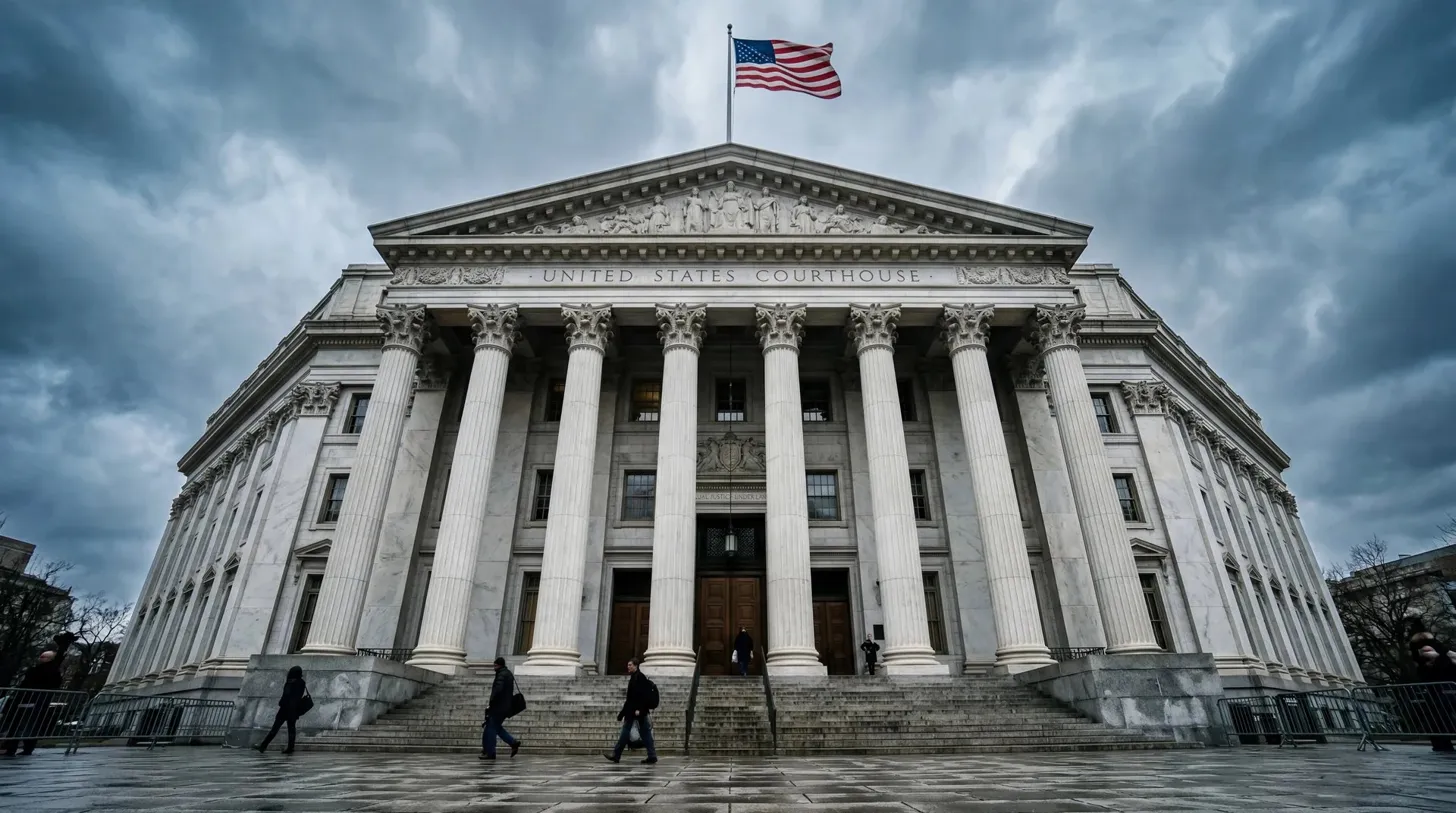
Federal courthouse where many consumer class action cases are filed and approved. Public court records show that the majority of approved settlement funds never reach the consumers they are meant to compensate.
If you are a person who buys groceries, pays a cell phone bill, uses a bank, streams any kind of media, owns a car, or has ever filled a prescription — the findings of this investigation concern you directly.
Over the past several years, a pattern has emerged in the American consumer legal system that, until now, has received almost no mainstream press attention.
According to data compiled by independent consumer advocacy organizations, court filings made public under federal transparency rules, and analyses published in legal industry trade publications, more than $8 billion in court-approved consumer settlement funds have gone unclaimed in recent years alone.
That is money that judges — sitting federal and state judges — ruled that ordinary American consumers were legally entitled to receive.
Most of them never saw a single dollar of it.
How Court-Approved Money Ends Up Back In Corporate Hands
To understand the scale of what is happening, it helps to understand how these settlements work in plain English.
When a large corporation is accused of wrongdoing against consumers — price-fixing, deceptive advertising, illegal fees, data mishandling, defective products — a lawsuit is often filed on behalf of an entire group, or "class," of affected customers. This is called a class action.
Most of these cases never go to trial. Instead, the corporation agrees to a settlement: a large sum of money, negotiated and approved by a judge, meant to be distributed back to the harmed consumers.
Here is where the system begins to fail.
What our investigation found:
- Notification reaches very few consumers. Settlement notices are typically placed in small legal ads, low-traffic court websites, or sent to outdated mailing addresses — methods that reach only a fraction of eligible claimants.
- Filing processes vary wildly. Each settlement has its own form, its own documentation requirements, and its own deadline. No central registry exists to help consumers track them.
- Claim rates are catastrophically low. In many approved settlements, participation rates fall below 10% — meaning more than 90 cents of every dollar the court awarded to consumers goes unclaimed.
- Unclaimed money often returns to the defendant. Under a legal provision known as "reversion," a significant portion of unclaimed funds in many settlements is returned to the very corporation that was sued.
Read that last one again carefully.
When consumers do not file their claims, in many cases the money simply goes back to the company that was accused of harming them in the first place.
The Scale Is Bigger Than Almost Anyone Realizes
Our review identified approved consumer settlements in recent years across a remarkable range of categories. What follows is a partial list — drawn only from publicly available court filings and settlement administrator reports:
• Grocery and food products — including multiple settlements involving dairy, eggs, poultry, canned seafood, and packaged goods manufacturers accused of price-fixing or deceptive labeling, with total consumer fund values reaching into the hundreds of millions.
• Telecommunications — major wireless carriers and cable providers have faced settlements over hidden fees, misleading billing practices, and data throttling claims.
• Banking and financial services — overdraft fee settlements, credit reporting errors, and mortgage servicing violations have resulted in court-approved funds repeatedly exceeding $100 million per case.
• Data breaches — when a company loses your personal information, you may be legally entitled to compensation. Major breach settlements have covered tens of millions of Americans whose data was exposed.
• Pharmaceuticals and healthcare — settlements involving insulin pricing, inhaler costs, and prescription drug overcharges have been approved but remain largely unclaimed.
• Automotive — emissions violations, defective components, and misleading fuel-economy claims have led to some of the largest consumer settlements in history.
• Streaming services, ticketing platforms, appliance manufacturers, airline refund disputes, gym memberships, printer ink pricing — and dozens more.
Why The Media Has Largely Ignored This
A reasonable question at this point is why — if the numbers are this large, and the pattern this clear — this has not been a consistent mainstream news story.
The answer, according to legal analysts we reviewed, comes down to three factors:
First, individual settlements do not generate dramatic headlines. A case about a $0.85 refund per cereal box does not get the same attention as a celebrity trial, even when the total consumer fund exceeds $50 million.
Second, the companies being sued have significant public relations resources and a direct interest in minimizing public awareness of how to file claims.
Third, the information is scattered. Settlement data lives across hundreds of separate court websites, law firm portals, and administrator pages — none of which are designed for ordinary consumers to navigate.
The result, as one consumer finance report recently concluded, is that most Americans will miss settlements they are legally entitled to, not because they did anything wrong, but because the system was never built to reach them.
What Has Changed Recently
The situation is not entirely bleak. In the past two to three years, a small number of private platforms have emerged with the specific goal of centralizing this information — making it possible for a single consumer to see, in one place, the approved settlements they may qualify for based on their purchasing and account history.
One such platform has drawn particular attention for its plain-English walkthrough — a free, short video briefing that explains the full settlement landscape, how the claims process actually works, which categories of settlement most consumers miss, and how to determine personal eligibility without legal expertise.
The briefing has begun circulating widely among older consumers, small-town community groups, church networks, and family messaging chains — often shared by adult children trying to help their parents recover funds they were never told about.
Its approach is educational rather than transactional: the video runs approximately ten minutes, requires no signup to watch, and is designed for viewers with no prior legal knowledge.
Watch The Free Consumer Briefing
A plain-English walkthrough of the approved settlement landscape — which categories qualify, how claims work, and why most shoppers miss out. Approximately 10 minutes. No signup required.
▶ Watch The Free BriefingWhat Readers Should Know Going Forward
Based on our investigation, three practical points stand out for American consumers:
Most approved settlements have filing deadlines. Once that deadline passes, the money is gone — often returned to the defendant corporation. There is no backdated process for late claims.
You are almost certainly eligible for at least one active settlement. Given the sheer volume of approved cases in recent years covering everyday categories — groceries, utilities, telecommunications, banking, healthcare — the odds that any given American household has zero eligible claims is statistically very low.
The responsibility to find and file currently rests with you. Until the notification system is reformed, consumers who want to recover money they are legally owed must seek out this information themselves. No government agency currently performs this function on your behalf.
This is an ongoing investigation. We will continue monitoring public court filings, settlement administrator reports, and consumer advocacy findings as they are released.
This report draws on public court records, settlement administrator publications, and consumer watchdog research. Specific claim eligibility varies by individual circumstance and case. This article is informational and does not constitute legal advice.
Get The Full Picture In 10 Minutes
The same free briefing readers are sharing with their families. Plain English. No legal background required. See exactly where you likely qualify.
▶ Watch The Free Briefing